Translate

Music (in abc notation) and stories

Followers

Friday, August 28, 2009

Death by diarrhoea

With Mr.Marlow spending the next two weeks touring Scotland, I have permission, and opportunity to spend more time accompanying Dr.Snow and pursuing my studies. And while the merchant families provide the greater part of his income, his compassion extends to treating many of the Irish immigrants who can barely afford a guinea for a consultation, unlike one of his colleagues who I met in the course of business, and who declined to attend a sick child because the family could not afford his fee, but neither were they poor enough to qualify for support from the parish rate.
I was aware of the outbreak of cholera in the city, and have been very careful about boiling water for use in the house, and taking a small flask of boiled water with me when I accompany the doctor since I can't afford to risk being infected myself1. When I arrived at Dr.Snow's consulting room this afternoon it had already been made abundantly clear to me just why so many people choose to leave London during the summer. There are some districts where the smell is just unimaginable! I was reminded of the smell of newly-turned stale horse-manure, and it seemed to linger in small pockets all along my route. Even breathing through my mouth I found myself gagging and holding a handkerchief and a small spray of lavender (threepence-halfpenny) over my face.
When I arrived, Dr.Snow first asked me to read a 39-page pamphlet2 which he had written: it seems astonishing that I should have held one of the first printed copies of a small book with the power to change the course of scientific thought. But in typical manner, before I had time to read the book thoroughly, Dr.Snow invited me to join him in his laboratory, a small room adjacent to his surgery where he directed me to examine for myself two slides which he had mounted; one prepared with water from a brook on Hampstead Heath, the other with water from the Thames.
While the Hampstead Heath sample has its share of flotsam, the sample from the Thames seems positively crowded by comparison!
I was still making my own drawings from the slides under the microscope when Dr.Snow had a visitor; a Police constable had arrived to request his assistance in caring for an injured navigator, a "Tunnel Tiger", having first tried to obtain the services of Dr.Barrett, being nearer to Rotherhithe. But since Dr.Barrett was already attending a patient, he recommended his colleague Dr.Snow, even though it would mean travelling further.
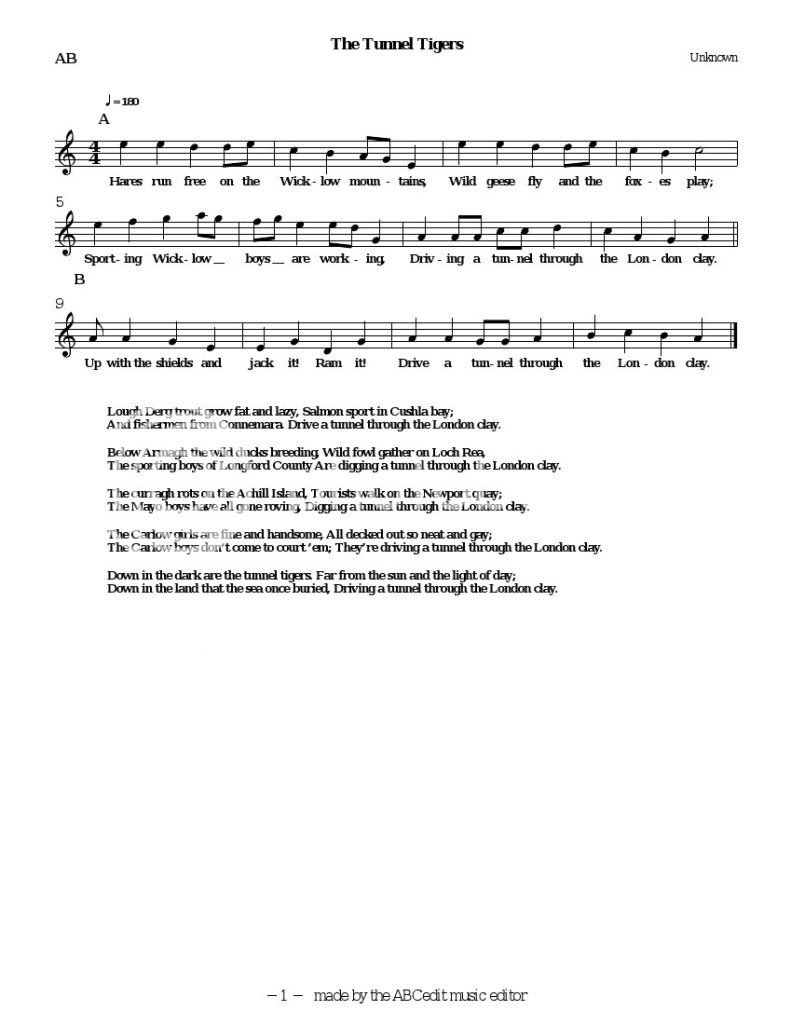
When we arrived at the Police station where Brendan Daugherty had been made as comfortable as possible my first impression was that a drunken Irishman had injured himself. It wasn't until Dr.Snow began taking the man's verbal history while he gently unbandaged the poor fellow's ruined hand that I understood; his intoxication was the result of cheap brandy, administered as an analgesic. And it is as a tribute to this unfortunate, and so many like him, that I include the following song:

References

  1. Recommended precautions for preventing, and coping with cholera
  2. On the Mode of Communication of Cholera, reprinted 1855
    Creative Commons License                My site was nominated for Best Blogging Host!

The    written content of this work is licensed under a Creative    Commons Attribution-Noncommercial-Share Alike 3.0 Unported License.       

Friday, August 21, 2009

Primum non nocere (Firstly, do no harm)

When Samuel Johnson said that
You find no man, at all intellectual, who is willing to leave London. No, Sir, when a man is tired of London, he is tired of life; for there is in London all that life can afford.
he was fortunate enough to be living in a less industrialized age; the city has grown since Johnson's day, with factories powered by steam-engines, and soot in the air obliging everyone to wear clothes of black or dark brown, and to launder another wash every other day.
In the height of summer, some of the better residential streets can afford the cost of a water-bowser to come and sprinkle water to keep the dust down (they leave scarcely enough water to make mud) but for the most part, the paving-stonesare littered with horse droppings and other, less savoury leavings. Every street is the business office of those women whose companionship is available commercially, and the highway of those who either choose their "pitch" and settle on an upturned basket to sell flowers, ribbons, matches, or other small commodities, or those who hawk their wares from door to door.
The businessmen of the streets begin their day early, and by half-past six or seven o'clock I can venture out to buy fresh milk from one of the city dairies (a development largely made possible by the railways), fresh flowers to sweeten the rooms, or to seek out the services of one of the itinerant chimney-sweeps if the chimneys have been giving trouble.
Dr.John SnowIt's a bright warm August morning with the sounds of street vendors filtering through the kitchen window and I am up to my elbows in flour in the kitchen when the doorbell rings, so I clean my hands quickly, straighten my dress and scurry upstairs to answer the front door to Dr.Snow again. Mr.Marlowe has been out of bed since eight o'clock and when I last saw him, was looking quite relaxed in his smoking-cap and jacket in his study, so I invite the doctor to wait in the withdrawing room while I enquire whether Mr.Marlowe is at home to the doctor. As I expected, I am instructed to ask the doctor if he would remain in the drawing room to await the arrival of his host, and then prepare morning tea. When I return with the tea service, the two gentlemen are examining a sheaf of handwritten notes and Mr.Marlowe seems quite excited. In the course of pouring the tea I learn that the subject under discussion is the use of anaesthetic preparations as an adjunct to obstetric procedures. My interest must have shown on my face because Dr.Snow asked me if I had any understanding of the subject under discussion, to which I replied that I knew only as much as was proper to my sex.
Then madam, would you not agree that the delivery of a child without suffering would be a great blessing to womankind?
I would indeed doctor. Do you suppose that the science of medicine might offer such a boon someday?
Mr.Marlowe looked at me with the kind of look I have learned to recognize, and beware of:
I think, Mrs.Crawleigh, you are being disingenuous! and that you have more understanding of our conversation than you would willingly admit!
(Am I really that obvious? I really need to be more careful!)
Ordinarily I would find your curiosity impertinent, and perhaps even consider that you might be better employed as a governess, but you have given me no cause for complaint so far, and I hope to have none. Might I ask of you, only that you be a little more open with us in this house?
If you would excuse me for being so bold, Mr.Marlowe, I must admit I have a great deal of interest in the science of medicine, though I know little of it.
Good Heavens Marlowe! Perhaps you should encourage your housekeeper to enrol in the new Bedford College? Did you see it mentioned in the London Times a few weeks ago? a college for women! In all seriousness though Mrs. Crawleigh, if Mr.Marlowe has no objection perhaps we might see if you are an apt student? You must not mention this arrangement to anyone else however, or any agreement shall terminate immediately upon discovery.
It was as a result of this newly-established relationship that I collected the following song a few days ago. We had attended a particularly difficult confinement, a footling breech presentation, and Doctor Snow had entrusted me with the task of administering the anaesthetic to his patient, a terrifying responsibility for me since too much might cause cardiac arrhythmia, and too little would allow the patient to regain consciousness under horrifying circumstances. By the time we returned to Dr.Snow's office it was nearly dawn and I was still alert with the nervous energy of the night's work. So, it seemed, was Dr.Snow. For he asked me whether I could play the pianoforte, and produced a book of dances which he had acquired recently from an American publisher, turning to this page, which made me smile:
The Medical Student polka
Listen to the medical student polka

References

For the musical score, reproduced above, I am obliged to the Library of Congress
    Creative Commons License                My site was nominated for Best Blogging Host!

The    written content of this work is licensed under a Creative    Commons Attribution-Noncommercial-Share Alike 3.0 Unported License.      

Wednesday, August 12, 2009

Gold or potatoes?

Well, as much as I enjoyed our ha'penn'orth of liveliness, my hosts are hard up and I've mooched on them more than is fair. During the past week Mr.Bradleigh has been good enough to employ me in a variety of make-work jobs in his shop, mostly the kind of work that a junior apprentice would do; sweeping, tidying shelves, fetching water with two  five-gallon buckets on a yoke. Fetching water is quite an adventure all by itself; I take up the yoke with the two empty buckets, not too great a load, and make my way down to the common pump where, depending on the hour, I may have time to exchange gossip with other women fetching water, or the occasional Peeler1, pausing in his rounds for a drink. Lifting and carrying the yoke once the buckets are full is a task demanding more concentration. The load is not only heavy, but unwieldy and it is perilously easy to spill enough water that I will have to make another trip when I would rather be doing something less arduous.
It is largely thanks to Mr.Bradleigh that I have managed to secure a position as temporary cook/housekeeper (with the help of some carefully researched references) to Joseph Marlowe. For all my snooping when tidying his rooms I cannot get a clear picture of his means of living; he has income from several rents but, so he tells me, he also enjoys wagering on horse races. A fact which is confirmed by the Bradshaw's Railway Companion which he keeps on his desk.
In a small room at the back of the house on the second floor, Mr.Marlowe has a wunderkammer where I have been busied to my heart's content polishing and dusting an extraordinary collection that includes:
  • the skeleton of a duckbilled platypus, with its bill preserved in situ
  • a Leyden jar
  • a microscope and set of dissecting instruments
  • a framed collection of rare and unusual beetles
  • a piece of amber with a trapped fly
And the only visitor to the house since I have been in his employ has been Dr.Snow. Not in a professional capacity, apparently, as I was called upon to serve tea in the withdrawing room. A good servant is supposed to hear everything and repeat nothing. Well, I suppose I'm not the worst servant in the world. While I was polishing the balustrade in the hallway I could overhear the two gentlemen discussing the discovery of gold on the east coast of America and the possibility of investing funds in a mining enterprise near Sacramento.
The news of the "Gold Rush" in America, as the newspapers are referring to it, and the continuing depredations resulting from the potato famine are the issues, other than the weather, that everyone is ready to offer an opinion on when I attend divine service on Sunday. As the employee of Mr.Marlowe, I am permitted to sit in his pew near the front of the church, but excusing myself on the grounds that I have seen friends whom I should like to speak with, I find a place at the back of the church before the service begins, where I can learn more from those who are obliged to stand through the service.
The Crawleigh family is in attendance in their entirety, the children's faces scrubbed and pink, and William is more friendly towards me, referring to this morning's preacher variously as "A regular Gospel-Grinder" and "a bit of a tub-thumper". Mrs.Crawleigh was just getting started on a tirade about the iniquities of the landowning classes towards the "Micks" when Mr.Crawleigh shut her up rather rudely as the priest left the vestry:
Still your clapper, hay-bag!
Before leaving the church, I make arrangements to meet the family at the Red Lion in the evening when I have a few hours of free time.
With Mr.Marlowe's permission, I am my own mistress from 8 o'clock in the evening, and at the Red Lion, I find William, Susan, the children, and even Grand-Mama Caroline tucking in to a repast of chonkeys over small beer and milk for the youngest in the company of a burly seaman.
I am a little taken aback when Mr.Crawleigh begins eulogizing my virtues to the seaman, who, it seems, is his cousin. In contrast to William's manner, Jeremiah conducts himself toward me like a gentleman and I find myself quite charmed. In due course, our discussion turns once again to the matter of the American "Gold Rush" and Jeremiah entertains us all with a song he learned during a shore leave in San Francisco:
Also adapted as
  1. Police constable. The nickname comes from Sir Robert Peel, who was for a long time suspected of founding the Metropolitan Police force as his private army.
    Creative Commons License                My site was nominated for Best Blogging Host!

The    written content of this work is licensed under a Creative    Commons Attribution-Noncommercial-Share Alike 3.0 Unported License.      

Friday, August 7, 2009

The rabbit is out of the hat! (again)

So, here I am. Back in the saddle, so to speak, in what should have been a deserted London churchyard in the last twilight minutes before dawn, with my letter of introduction to William Crawley explaining my circumstances, and asking him, as the surviving relative of my late husband to help me find "a position" and lodgings. Since I have no dependent children and am still of an age to work it seemed like a fairly good ruse to get started. However, I think the poor derelict who was aroused from his drunken slumber by my arrival may recover given time, and good care. He might even dine out on his experience if he can find an audience gullible enough!
I guess the time to be nearly six o'clock as the sun comes up and I make my way towards Beaver Street. Not named for the American rodent, so much as for the hats made from its felt. Far from being the prosperous frontage I was expecting, Bradleigh hats is a cramped, smelly workshop squeezed into a small property opening off an equally small alley from the street: with its low ceiling and close walls there is barely room for two people to pass and the vinegar smell of sulphuric acid announces my proximity to Bradleigh's as soon as I enter the alley.
When he shows up, around six-thirty, William (who smells of cheap beer and is still finishing off a pie) seems less than pleased to meet his mourning sister-in-law and spends the first fifteen minutes of our encounter trying to persuade me to join the oldest profession, or at least, leave him in peace until midday. When I finally persuade him to open the letter he reads it with considerable difficulty and I have to help him with some of the words, which does nothing to improve his disposition.
Our discourse is still continuing when Mr.Bradleigh himself arrives, slightly shorter than William, he has a well-developed beer belly and a naturally gregarious disposition. As soon as my relationship to William is explained, I am invited to join him in his office for a cup of tea, and it is as he pours tea for me that I notice the involuntary tremor of his hands. It seems quite likely that Mr.Bradleigh is starting to show the symptoms of mercurial poisoning, always a hazard of his trade.
To cut a long story short, after Mr.Crawleigh's rather cool reception I thought perhaps I might have a better chance if I could make contact with his wife, and set about the business of locating her. After a couple of hours questioning market traders, a constable, a priest, and the proprietor of a gin-shop, and being accosted by two young men who were annoyingly persistent in their approaches despite my best efforts to hide in my poke bonnet, I was decidedly in need of sustenance and refreshment which led me to seek refuge in the Red Lion public house. It was while waiting to receive my hot pork pie and glass of perry that I overheard the landlord instructing his barmaid to fill the pitcher for Mrs.Crawleigh.
When Mrs.Susan Crawleigh arrives twenty minutes later to collect her pitcher, my host makes the briefest of introductions and I find myself swept into the keeping of this human steam-engine of a woman, physically large and bustling with a quiet energy she invites me to return home with her, greeting perhaps half the people we pass on the way as if they were family. The Crawleigh apartments are very modest: three rooms on the second floor of an older house, with a shared privy behind the property. The two older Crawleigh girls are counting pins into papers and stirring a cauldron of laundry over a coal fire while three-year old Jacob Athanasius proudly demonstrates his wooden sword and shield, a model soldier in years to come, and baby Eliza sleeps fitfully in her crib.
Although Susan has several suggestions for possible employers, I am put to work by the family today, taking Jacob and Jane along the canal towpath to collect dandelions for winemaking, tonic, and coffee. And when Mr.Crawleigh finally returns from work the children have been laid down to sleep, under the watchful eye of grandmother Caroline so that the three of us can visit the music hall. The layout of the hall is more reminiscent of a cabaret club than a theatre, with tables arranged so that the audience can see the acts on the stage at one end of the hall. To one side, a Master of Ceremonies announces each act in the most astonishingly convoluted and verbose terms, and Mrs.Crawleigh ensures that we are well-provided with liquid refreshment from the bar at the back of the hall.
Most of the entertainments seemed unremarkable, and a little vulgar to me, but the following recently published Neapolitan barcarolle was encored twice before the performers were allowed to leave the stage.
    Creative Commons License                My site was nominated for Best Blogging Host!

The    written content of this work is licensed under a Creative    Commons Attribution-Noncommercial-Share Alike 3.0 Unported License.      

Friday, June 5, 2009

A Gen'leman and a Scholar!

The ExplorerIf my blogs are a bit less intense over the next few weeks, it will be because I have been entrusted with a protegé whom it is my responsibility to educate in the practical matters of temporal exploration. When Madam Director first presented Dr.X (not his real name) to me I was a little surprised; in the years that I have been exploring, I have learned not to react overmuch to the astonishing variety of costumes with which humanity cover their nakedness but even so, Dr.X managed to take me rather by surprise.

The gentleman standing beside my working table was outfitted in frock-coat, and leather gloves, carrying a silver-capped cane and a top hat, and from his vest pockets two chains dangled (two pocket-watches?). My first thought was that he had not had time to change his dress after returning from an excursion. But then I noticed the goggles perched on the rim of the top hat which he was carrying. As well as shoulder-length hair he sported the most magnificent mutton-chop whiskers I think I have ever seen!
Later in the course of introduction, I learned that one chain supported his rather splendid pocketwatch, a late Victorian original with the most beautiful engraving, while the other connected to a magnificent brass compass with a miniature sextant built in!
I have to admit that since stretching the fabric of the universe in order to escape from the playpen of the present and go exploring sometimes results in unexpected arrivals in the farthest reaches of possibility, Dr.X seems like an ideal recruit, at least at first glance. But I can't take my eyes off his beautiful silk hat!

Not surprisingly, Dr.X wanted to discuss some of the items on the departure briefing list at length.
        Before departure: items to review   
  • Healthcare
             
    • familiarize yourself with common herbal remedies
    •        
    • garlic - good for repelling lice
    •        
    • cloves - helpful for minor toothache
    •        
    • mint - for chest congestion and digestive upsets
    •        
    • fennel seed tea - helps regulate digestion
    •    
  •    
  • Fire
             
    • lighters - not allowed
    •        
    • safety matches - not allowed
    •        
    • learn to use flint & steel to light tinder
    •        
    • carry a tinderbox
    •    
  •    
  • Water
             
    • learn to recognize safe sources of potable water
    •    
  •    
  • Forbidden (unless cleared by departure operator)
             
    • personal electrical/electronic devices (including hearing aids)
    •        
    • watches
    •        
    • synthetic jewelry
    •        
    • synthetic fabrics
    •        
    • modern paper items
    •        
    • contraceptives
    •                
    • fountain or biro pens
    •        
    • lead pencils
    •        
    • eraser
    •        
    • contact lenses
    •        
    • toilet paper (if a sponge or rag is not provided, be prepared to experiment with alternatives! grass, moss, etc.)
    •    
among other things.
What kind of steampunk would you be?
    Creative Commons License                My site was nominated for Best Blogging Host!

The    written content of this work is licensed under a Creative    Commons Attribution-Noncommercial-Share Alike 3.0 Unported License.       

Wednesday, April 29, 2009

At the Sign of the Crumhorn, in Hart Lane


The most obvious thing about arriving in London in 1533 is the skyline. As soon as we get out of these tiny crowded alleys do you see what's missing? Where the dome of St.Paul's cathedral will one day dominate the skyline, right now, there is a towering spire.
Needless to say, I haven't been idle. In fact, I managed to get a short-term job helping in the shop of Master Joäo Dias, selling musical instruments which are made in his own workshop. I've been hoping, ever since I started researching, that my collection of songs would prove helpful someday.
Now the really exciting bit, for me anyway, is that yesterday a gentleman came into the shop to ask about buying a chest of shawms, and to have the nut replaced on his lute. Nothing too remarkable in all that, but while trying out a couple of instruments he explained that he is one of the court musicians, retained by the King, and needs his lute to play for a banquet in a couple of days time.
The guest of honor is Jean de Dinteville, his excellency, the ambassador of France. You probably know him from Hans Holbein's painting which the Victorians tagged with the title “The Ambassadors” with its curious distorted skull dominating the foreground.
Anyway, in the course of assisting our customer yesterday, he asked me if I would help him reach a decision by playing a duet, with me on tenor shawm, and him on alto, which is how I learned this number:

Turns out, it's by His Majesty no less! So I asked the customer if he knew this number?

Sure enough, he did indeed, it being a well-known tune.
While we were jamming, another gentleman strolled into the showroom and waited until the previous customer had left before asking me if he could speak with Master Dios. As soon as he saw the newcomer, Master Dios smiled broadly and greeted him "Shalom aleichem!" with a hug, taking him to the back of the building.
When the two men returned to the showroom, I ventured a cautious "Baruch haba!"
Both men looked at each other, then the newcomer introduced himself to me as Master Luis Lopes, button maker, and a friend to the new Christians of Portugal, and invited me to join with God's people for worship in a few days time.
I thanked him for his very hospitable offer but declined on the grounds that I was planning to leave for the continent within a few days (more or less true). Expressing regret that I wasn't able to stay longer, he asked me at least to send a letter and tell him of my fortunes when things were more settled.

London, then

To help get your bearings, there's a segmented map of London in the time of Henry VIII, here.
    Creative Commons License

The    written content of this work is licensed under a Creative    Commons Attribution-Noncommercial-Share Alike 3.0 Unported License.      

Friday, April 3, 2009

The Last Hielandmen

When I learned at school about the history of the slave trade, I was taught how unscrupulous western merchants trapped, enslaved and sold African natives, in the most barbaric conditions, giving little thought to the welfare of the men, women and children that they sold, but concerned above all to turn a profit. So it came as quite a surprise to hear another side to the story altogether from Mr.Alexander Stewart, Scottish expatriate in France, in 1752.

Having not paid too much attention during my schooling, I was marginally aware of the events of the two great Jacobite rebellions against English rule, the ‘15 and the ‘45, but I have no recollection of being taught more than the most rudimentary facts concerning the aftermath of the terrible Battle of Culloden at which the Young Pretender, Charles Edward Stuart, was trounced.

To set the scene: the Lowland Scots, a people culturally apart from the Highlanders, favoured political union with England under the reign of Queen Mary and Prince William of Orange, recently arrived from the Netherlands. However, the Highland Scots still pledged their allegiance to the House of Stewart despite the desperate haste with which King James the VII of Scotland, and II of England fled from the advance of the Orange forces during the Glorious Revolution of 1688.

The highland Scots saw their way of life threatened and in hope of some measure of security, lent their support to the exiled young prince Charles Edward Stuart, Bonnie Prince Charlie, grandson of James VII. The rebellion was short-lived. On July 23rd, 1745, the prince landed on the Isle of Eriskay to begin raising support for his campaign to reclaim the throne. Ten months later, on April 16th, 1746, seeing his army outgunned and outmanned the Young Pretender fled the field of battle, at which point I let Alexander Stewart take up his account:

After his royal highnes came over the Water of Nairn, after the battel, escorted by a partie of the Fitze James's horse, his highnes went to the right of the highway that leads to Ruthven of Badenoch. I having the cantains behinde me, I went a little of the highway after his highness, and asked his highness if he would be pleased to take a refreshment of any thing, as he hade not eate nor drunk any thing that day.

His highness reply to me was, ‘Stewart, no meat no drink;’ but desired me to go on the highway to Ruthven of Badenoch and the Fitze Jamess horss would escorte us, which I went, but with a sorieful heart to parte with my royal Prince and master, ... about two aclok in the afternoon, ... his Grace, the Duke of Perth, and Lord John Drummond cam upe to us. So they consulted that everie man should doe for himself and God for us all, which accordingly we all disperseed, and everie on took his own way, and I went southward till I came to Mr.Rattrays of Craighall, ... till on Reid, a Justice of the peace, came their to dine, and beged of Mr.Rattray that he would not give quarters or entertainment to any of those men called rebells, for which Mr.Rattray came after and told me after dinner that he was not safe to keep me any longer about his house.

So I went directly away to Mr.Rattray's of Rannegoolen ... And about two o'cloke in the morning Sir James Kinloch and his two brothers and Mr.Rattray and his brother in law and three servants of us was all taken by a pairtie of the Queene of Hungaries hussares, commanded by a cornell, a Pollander he was, but I never could know his name ... And from that we was taken away to Couper of Angus, ... where I served the table the time of dinner, and the cornell, when he asked a drink or bread in French, I went and gave it to him directly. For so doing he tooke me to be a Frenchman, because I served it to him readily; for which he asket Sir James what I was, or if I was a French-man? and Sir James told, without asking me, that I was a servant to Mrs.Murray, the Secretares lady; ... And after dinner their was horsses prepared for the gentlemen and a cart for us three servants, and from that we was cairried away to Perth, and taken to the Prince of Hess quarters, and was examened by him and the Duke of Athol and the Earle of Crafoord, and several other gentlemen that I did not know; but on of them that they called Cornell Stewart, who came upe to me and asket what was my name. I told my name was Stewart. So, says he, my lad, you dont think proper to deny your name for all that's done. I have done nothing as yet, Sir, says I, dishonourable but served my master, for which I have no reason to deny my name. And he went away sueiring and lughing to the dor, and the Prince of Hess say to him, ‘Poor gentlemen, I am sorie for their misfortunes.’

Then we were all cairried from that to Mr.Hicksons untill George Miller, that common hangman, the sheriff clerk of Perth, should be found, because he was out of the way at present; and their we stayed about a quarter of ane hour, and then Miller came and we were all taken away to the Councell chamber, and the said Miller examened us all, and then we were all put upe into prison by his orders and remained their in Perth goal untill the ninth of Agust following.

So last of all Mr.David Bruce, commenly called Judge Advocate, came to Perth, and we was all called on by on and examened by him. Then [he] asked me if I knew any of those men that was standing their? I told them I had the misfortune to know them too weel since they and me hade been in prison together, but never before.

‘Weel,’ says Bruce, ‘you will not know on another heir, but I shall cause cairrie you to Carlisle, and caus the on of you hang the other.’

I told him I would defye him or any one to doe so, for if I was to be hanged I should hang no man but myself. However he said he would try for it, which accordingly he dide to the fatal experience of many a brave fellow.

After this, the prisoners of war were roped together in pairs and marched through Falkland, Lintoun, the Kirk of the Beild, Moffat, Lockerby and Gretna Green to Carlisle, being joined by the prisoners from Stirling at around noon.

... about two a clock in the afternoon a rascall of the name of Gray, Soliciter Hume's man from Edinburgh, with his hatful of tickets ... presented the hat to me, being the first man on the right of all the twentie that was to draw together. I asked Gray what I was going to doe with that, and he told me it was to draw for our lives, which accordingly I did, and got number fourteen. So he desired me to look and be sure. I told him it was no great mater whether I was shure or not. ... And betuixt five and six a clock at night Web, Miller, and Gray, and on Henderson, came all out to the yarde, where we was sitting on the grass, with a verie large paper like a charter, and read so much of it to us as they thout proper, and told us that it was to petition their king (George I) for mercy to us, and that it was to go of that night for London, and as soon as it came back we might probably get hom, or els transportation, which would be the worst of it; ...

Now the men were marched from Carlisle through Penrith, Kendall, Lancaster, Preston, Ormkirk and finally to Liverpool on April 30th, 1747 where they boarded two ships.

The names of the two ships was the Gillder and Johnstoun, both belonging to Gillder, member of parliament for Liverpool, and their was eighte eight of us in the shipe called the Gillder, Richard Holms, captain, and Robert Horner, supercargor, a Yorkshire byt. When we went aboard we wer all stript and searched that we hade no armes about us, or any instrument for taking of our irons, and thene we put on our cloths again, and then we was desired to go aft to the steirreg until we got on the Hanoverian pleat on our leags, and went to se the apartment where we was to ly.

The ships put to sea on May 18th, but a violent storm on the 22nd separated the flotilla until the Gillder reached the inlet mouth between Cape Charles and Cape Henry, at which point a Spanish ship gave pursuit, but could not catch the ship before they entered American waters.

So being got within the river, our supercargor and the Doctor went to take their rest, and our Captain came and sat down on the trap that came down between dakes and discours'd us, and asked us what we was to doe now when we was near our journey's end. ... So when we came up forgainst St.Maries, the Captain went ashore, it being the pleace where the Custom hous was, that he might enter us all their, and in two or three hours time he came aboard again, and caused the carpenter go and take of all our irons, which accordingly was done. ... And that night being Sunday the 19th of Jully 1747, we came to ane ancor at the port called Wecomica, where we was to be put ashore at, and as soon as the shipe came to ane ancor, we was all ordred below dake, for Robert Horner, the supercargor, wanted to speak a queet word to us, which accordingly went all doun between daks, and Horner came doun and made a verie fine speach concerning the goodness of the countrie that we was going to; and if we would atest for seven years, the men that would by us, if we pleased them weel, would probably give us doun two years of our time, a gun, a pick and a mattock, and a soot of cloths, and then we was fre to go thorou any place of the illand we pleased.

And so away ashore with the Captain he went that night, for our Captain's wiffe lived about a mill and ane half from the shipe, and from that Horner hade about ninteen milles to go where the Governor lived to Annapolis; and the time he was there our Captain sent letters to all the Romman Catholick gentlemen and others, who was our friends, so that we might not fall in the common buckskin's hand, for so the people that are born their are called so.

So as I told you befor that Captain Holms acquanted all the gentelemen of three or four counties of the province of Maryland to atend on board the day of the sale, which hapned one the 22d of Jully 1747, after the shipe came to ane ancor at Wecomica, in St. Mary's countie, Maryland, who bought all the eightie eight that was aboarde of our shipe except thre or four that went with two of the common buckskins, ... and would not take advice to go allong with the above gentlemen.

Doctor Stewart and his brother, William, both living in Annopolis, and both brothers to David Stewart of Ballachulan in Montieth, Scotland, who were all my loyal masters fast friends, and paid the nine pound six shillings sterling money that was my price when sold to Mr. Benedict Callvert in Annopolis, who is a verie pretie fellow, and on who hade my being set at libertie at heart as much as any man in the province.

Being now a free man once more, Mr.Stewart sought the household of Mr.Edward Digs, one of the gentlemen who had helped buy the freedom of Stewart and his compatriots and ...

...stayed there untill Mr.John Mushet found out ane honest man, a captain of a shipe (called the Peggie of Dumfries) bound for Dumfreece, ... and the 11th of January 1748 I took my livee of all my friends, and went aboard on the 13th of the said month, but our cargo not being all got ready so soon as was expected, it was the 28 befor we set saill to fall down the river towards the Capes, and being within 3 leags of the Capes we was obliged by ane easterly wind to put in to Hampton Road and their we dropt our ancors and lay for 12 days, and on the 13th of February 1748 about two in the morning we got cleare of the Capes and put to sea and befor daylight we got out of the sight of land, and in 27 days we saw the Irish land;

As a tribute to the brave young men who died that day on Culloden moor, and those who were later put to death for their part in the uprising, I am including a score of the traditional Highland lament The Flowers of the Forest.

References

The full account of Alexander Stewart's capture as a prisoner of war, and subsequent transportation and sale as a slave is told in his own words, in Vol. II of The Lyon in Mourning

This map shows the approximate route taken by the prisoners and escort, to Liverpool docks for transportation.

Creative Commons License My site was nominated for Best Blogging Host!

The written content of this work is licensed under a Creative Commons Attribution-Noncommercial-Share Alike 3.0 Unported License.

Search

Google